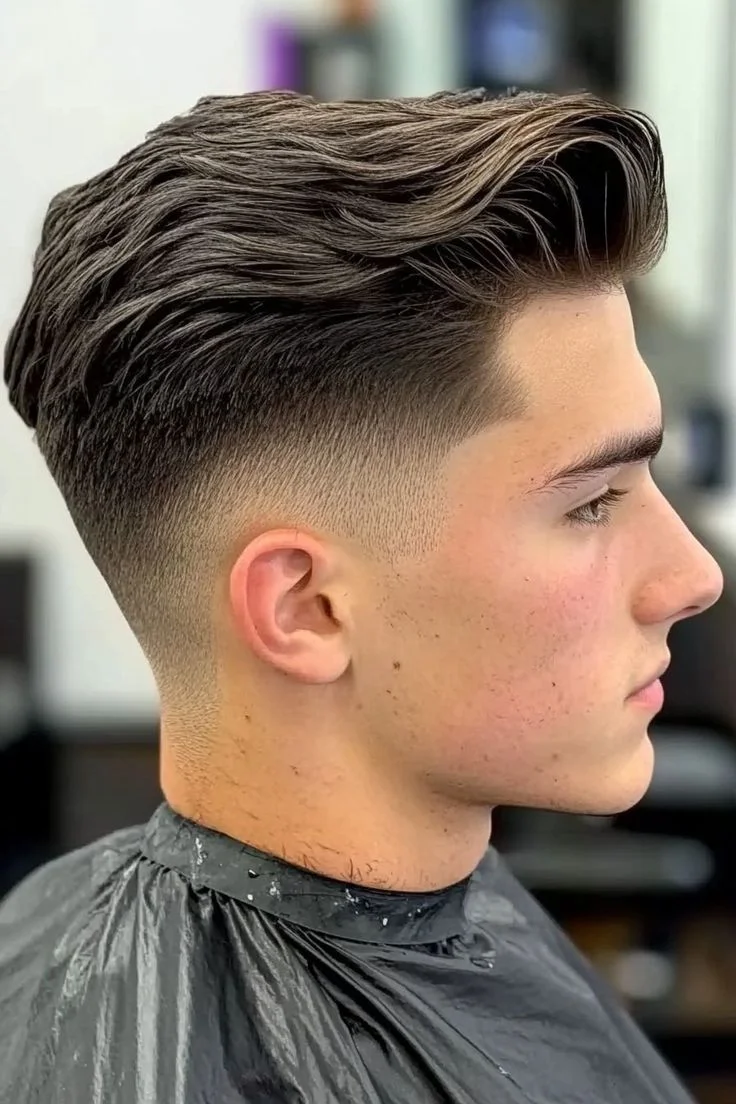
Low Fade Haircut: The Classy Look for Every Man
Introduction
In the evolving landscape of men’s grooming, few styles have managed to bridge the gap between “classic gentleman” and “modern streetwear” as effectively as the low fade haircut. While high fades and disconnected undercuts had their moment in the spotlight during the 2010s, 2026 is seeing a massive shift towards more subtle, blended, and sophisticated aesthetics.
The low fade is often described by barbers as the “entry-level” fade, not because it is basic, but because it is universally flattering. It cleans up the neckline and ears without exposing the scalp aggressively. It maintains the weight and shape of the hair on the sides, making it the perfect companion for men who want to look sharp in a boardroom yet stylish at a weekend party.
However, achieving the perfect gradient—that blurry transition from skin to hair—is an art form based on geometry and head shape. Whether you have coarse Afro-textured hair, pin-straight Asian hair, or wavy locks, there is a specific variation of the low fade haircut designed for you. This guide serves as your ultimate handbook to understanding, requesting, and maintaining this iconic look.
Industry Outlook: The demand for “Precision Barbering” is at an all-time high. Clients are no longer satisfied with a quick trim; they want a sculpted look. Premium grooming chains like The Salon Company are aggressively hiring barbers who specialize in clipper-over-comb techniques. (Pro Tip: If you have the skills, find high-paying barber jobs on the Stylelink app).
Anatomy of the Cut: Defining the “Low Fade”
Before you sit in the chair, it is crucial to understand the mechanics. A “fade” is simply a transition of lengths. The “Low” aspect refers to the starting height.
- The Baseline: In a low fade haircut, the shortest part of the cut begins at the very bottom of the hairline, usually starting just above the ears and dropping down towards the nape.
- The Blend Zone: Unlike a mid or high fade, the blending happens quickly within the first inch of the hairline. Above that inch, the hair retains significant length and texture.
- The Visual Effect: Because it keeps the sides fuller, it frames the face rather than elongating it. It provides a “square” silhouette which is traditionally viewed as masculine and strong.
Skin Fade vs. Shadow Fade: Choosing Your Intensity
A low fade haircut isn’t one-size-fits-all. You need to decide the intensity of the shortest section:
1. The Low Skin Fade (Bald Fade)
This is the high-contrast option. The barber uses a foil shaver or straight razor to shave the hair completely down to the skin at the very bottom.
Best For: Men who want a sharp, clean look that lasts longer.
2. The Low Shadow Fade
Here, the barber uses a #0.5 or #1 guard as the shortest length. It doesn’t show the scalp completely. It creates a “shadow” effect.
Best For: Corporate professionals or men with sensitive scalps who want to avoid razor irritation.
5 Stylish Ways to Wear a Low Fade Haircut in 2026
The versatility of this cut is unmatched. Here are the trending combinations:
1. The Textured Quiff with Low Fade
A timeless favorite. The top is kept about 3-4 inches long and styled upwards and back with a matte product. The low fade cleans up the ears while the weight on the sides connects seamlessly to the beard.
2. The “Slick Back” Low Fade
Think Wall Street meets Peaky Blinders. The top is long and brushed straight back with pomade. The low fade adds a modern, aggressive edge to an otherwise classic retro style.
3. The Curly Fringe Low Fade
For men with natural texture, this is the ultimate hack. The low fade removes the bulk from the neckline (preventing the “triangle” shape), while the top is left messy and pushed forward onto the forehead.
4. The Buzz Cut Low Fade
If you prefer short hair, adding a low fade to a buzz cut elevates it from “military recruit” to “fashion icon.” It adds a gradient detail that shows you care about your grooming.
5. The “Drop” Fade Variation
This is a specific technique where the fade line dips (drops) behind the ear towards the occipital bone. It follows the natural curvature of the skull, creating a streamlined profile view.
The Beard Transition: Connecting the Dots
One of the main reasons men choose a low fade haircut is how beautifully it transitions into facial hair. Unlike a high fade which disconnects the beard, a low fade allows the barber to blend the sideburns seamlessly.
Pro Tip: Ask your barber to taper your beard at the sideburns. This creates an “hourglass” shape—fading out at the ear and fading back in towards the jaw—which slims the face and looks incredibly high-end.
Why You Need a Specialist at The Salon Company
A low fade is the hardest fade to execute. Why? Because the “canvas” area is tiny. The barber has less than 2 inches of space to blend from skin to long hair. A mistake here results in a visible “step” or line.
We strictly recommend visiting The Salon Company. As a premium brand under the Stylelink ecosystem, their Master Barbers use specialized tools:
- Foil Shavers: To get the skin baby-smooth at the bottom without razor burn.
- Adjustable Clippers: To create micro-adjustments in length for a blurry, photoshopped finish.
- Hygiene Protocols: They use fresh blades and sanitized guards, preventing the dreaded “barber’s rash” (folliculitis).
Barber Career Spotlight: The Demand for Fading
Are you a stylist? Fading is no longer an optional skill; it is a requirement. Men are visiting salons more frequently (every 2 weeks) to maintain these precision cuts.
Here is how Stylelink helps you capitalize on this trend:
- Find High-Traffic Jobs: Download the Stylelink App to find vacancies at busy grooming lounges like The Salon Company. High traffic means more practice and more tips.
- Visual Portfolio: Use Stylelink’s Resume & Portfolio Builder. Upload macro photos of your blends. A sharp fade in a photo gets you hired faster than a text resume.
- Upskilling: The app community helps you stay updated on new tools, like the latest magnetic motor clippers, which make fading easier.
Product Science: Styling Your Cut
A low fade haircut focuses attention on the top of your head. You need the right products to make it work:
| Product | Hair Type | Finish |
| Matte Clay | Thick / Straight | Strong hold, zero shine (Natural). |
| Sea Salt Spray | Wavy / Fine | Adds grit and volume. |
| Pomade | Thick / Curly | High shine, slick look. |
| Styling Powder | Thinning Hair | Instant root lift and texture. |
Maintenance: Keeping the Fade Fresh
The only downside to a precision low fade haircut is the maintenance. Hair grows about 0.5 inches a month. On a fade, even 2mm of growth ruins the gradient.
- Frequency: You need a touch-up every 2 to 3 weeks to keep it looking intentional.
- DIY Cleanup: While you can shave your neck at home, never attempt to touch up the fade line yourself. The angles are impossible to see in a mirror.
- Scalp Care: If you get a skin fade, use a moisturizer on the exposed skin behind the ears to prevent dryness and flaking.
Conclusion
The low fade haircut is the Swiss Army Knife of men’s grooming. It works for every face shape, every hair texture, and every lifestyle. It provides a polished, clean-cut appearance without the severity of a high fade.
However, precision is key. Don’t let an amateur handle your fade. Book your appointment with the master barbers at The Salon Company. And for the barbers crafting these masterpieces, Stylelink is your platform for professional success.
Frequently Asked Questions (FAQs)
Q1: What do I ask my barber for?
Ask for a “Low Fade.” Be specific about how short you want the shortest part to be (e.g., “Low Skin Fade” for bald, or “Low Shadow Fade” for a #1 guard). Also, specify if you want it dropped behind the ear.
Q2: Is a low fade good for balding men?
Yes and no. A low fade preserves hair on the sides. If you are thinning on top, a High Fade is usually better as it reduces the contrast between the thin top and thick sides. However, consult your barber at The Salon Company for a personalized assessment.
Q3: How much does a Low Fade cost?
It typically costs the same as a standard haircut, ranging from ₹300 to ₹1000 depending on the salon tier. However, because it requires more frequent maintenance, the long-term investment is higher.
About the Author


