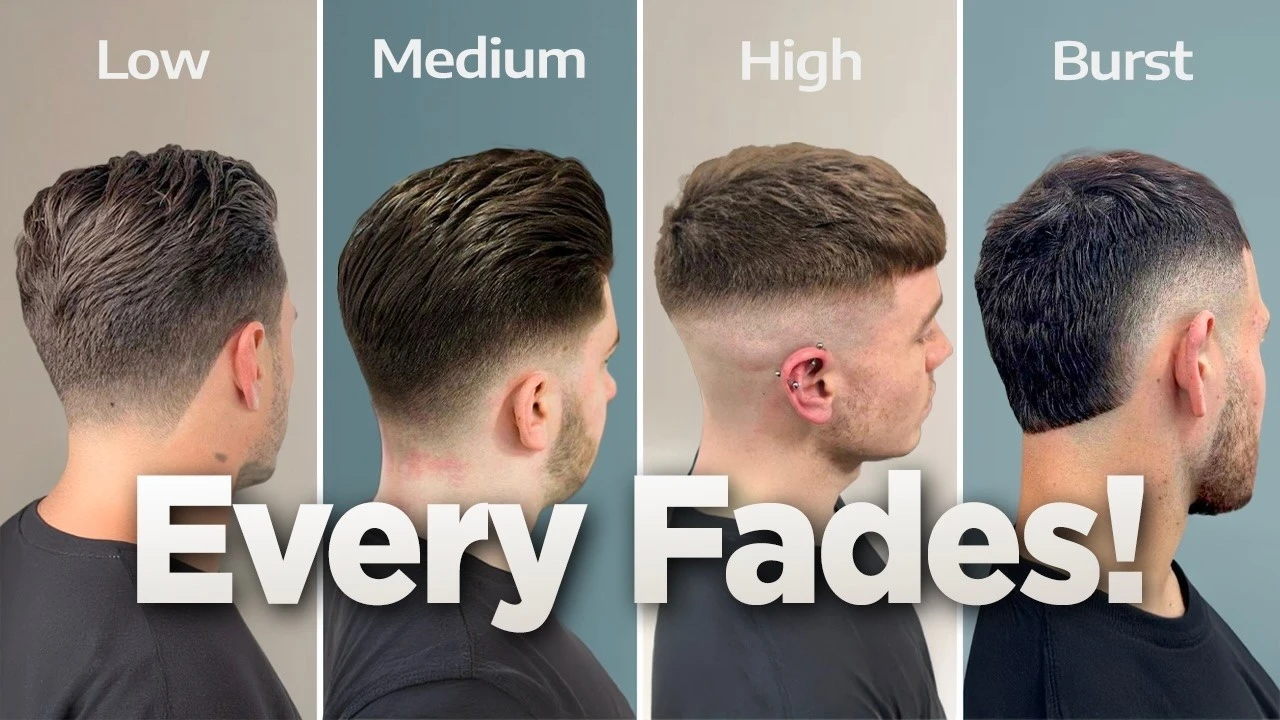
Best Fade Haircuts: Low, Mid, or High?
Introduction: The Architectural Power of the Fade
In the high-stakes world of men’s aesthetics in 2026, the margin between a “standard” look and a “prestige” look is measured in millimeters. While long hair and shaggy textures are seeing a massive revival, the technical foundation of the modern man’s image remains rooted in the precision of fade haircuts. A fade is not merely a short haircut; it is a calculated manipulation of light and shadow on the human skull. It is an architectural tool that can sharpen a soft jawline, elongate a round face, and project an aura of discipline and status.
The “Fade” as a concept originated in the military barracks of the 1940s, but it has since evolved into a complex art form requiring master-level clipper control. As we move through 2026, the trend has shifted away from the “one-size-fits-all” buzz to highly customized gradients. The modern gentleman is no longer just asking for “short on the sides”; he is deciding between the subtle sophistication of fade haircuts at a low level, the structural balance of a mid-level blend, or the aggressive, high-fashion impact of a high skin-baring gradient.
In this 1600-word definitive guide, we will dissect the “Shadow Theory” of barbering, explore the three primary heights of the gradient, and explain how to match these styles to your unique hair density and bone structure. We will also dive into the economics of the grooming industry, exploring why fade haircuts are the single most important skill for a modern barber to master. It is time to master the art of the perfect blend.
Industry Reality: We are currently facing a “Precision Crisis.” While thousands of barbers exist, only the top 5% can execute a truly blurry, “no-line” fade. Premium chains like The Salon Company have built their reputation on this technical mastery. (Pro Tip: If you are an artist with the clippers, you can secure high-paying roles by showcasing your work on the Stylelink app today).
The “Shadow Theory”: What Makes a Fade Blurry?
To appreciate fade haircuts, you must understand the physics of hair density. A “blurry” fade is an optical illusion. The barber isn’t just cutting hair shorter; they are managing the “Grey Scale” of the scalp. By varying the length of the hair, they control how much of the white scalp shows through the dark hair. A flawless blend happens when the transition from white (skin) to grey (stubble) to black (bulk hair) is so smooth that the human eye cannot detect where one guard length ends and the next begins.
This requires more than just clippers; it requires “Lever Play.” A master barber at The Salon Company constantly adjusts the open and closed positions of the clipper blade to create custom intermediate lengths. This is why fade haircuts are considered the most technically difficult services to perform correctly.
The Spectrum of Choice: Low, Mid, or High?
The “Height” of your fade dictates your entire aesthetic. Choosing the right height is a strategic decision based on your profession, your maintenance commitment, and your head shape.
The Low Fade: The “Old Money” Choice
The low fade is defined by its subtlety. The transition starts at the very lowest point of the hairline—directly above the ears and at the absolute base of the neck. It is a “blink-and-you-miss-it” detail that adds a sharp edge to an otherwise classic haircut.
- The Silhouette: It preserves the width of the head. If you have an oblong or narrow face, a low version of fade haircuts is your best friend because it adds visual weight to the sides of your head.
- Professionalism: This is the go-to choice for corporate executives and lawyers. It looks groomed and intentional without appearing “rebellious” or overly aggressive.
- Variation: Often paired as a taper fade, where only the sideburns and the nape are faded, leaving the hair behind the ears long.
The Mid Fade: The Golden Ratio of Grooming
In mens haircuts 2026, the mid fade is the undisputed bestseller. It starts approximately two inches above the ear, right at the temple line. It provides enough contrast to be noticed but enough hair to maintain a balanced shape.
- The “Slimming” Effect: By taking the hair short right at the parietal ridge (the widest part of the head), the mid fade has a powerful slimming effect. It is the perfect choice for men with round or square faces who want to look leaner.
- The Versatility King: It pairs perfectly with everything—from a professional side part to a messy textured crop or even a curly top.
The High Fade: The Aggressive Statement
The high fade is all about high-octane contrast. The transition begins near the crown and the corners of the forehead. This style leaves the sides and back almost entirely exposed, creating a “V-shaped” or “inverted triangle” silhouette.
- Visual Impact: It draws all the attention to the hair on top. If you have spent months growing out a pompadour or a mohawk, a high fade acts as a pedestal for that style.
- The Skin Fade Combo: High fades are almost always executed as a skin fade (bald fade), where the bottom is taken down to zero with a foil shaver. It is the sharpest look a man can wear.
Cranial Topography: Matching the Fade to the Face
One of the reasons fade haircuts often go wrong is that the barber ignores the client’s bone structure. Every head has bumps, dips, and flat spots (cranial topography). A master barber at The Salon Company will “stretch” or “compress” the fade to mask these imperfections.
| Face Shape | Recommended Fade Height | Anatomical Reason |
| Round | High Skin Fade | Removes lateral bulk to create vertical length. |
| Oval | Mid Shadow Fade | Maintains natural symmetry without looking too severe. |
| Oblong (Long) | Low Taper Fade | Preserves width on the sides to prevent a “pencil” look. |
| Square | Mid Fade | Highlights a strong jawline while softening the corners of the head. |
| Heart | Low Fade | Adds width to the lower half of the head to balance a wide forehead. |
Barber Jobs: Why Precision Fading is a Recession-Proof Skill
If you are a grooming professional, you are not in the business of cutting hair; you are in the business of “Maintenance.” Fade haircuts are the ultimate recurring revenue model. Unlike a long-hair client who might visit every 8 weeks, a skin fade client must return every 10 to 14 days to keep their edges crisp. This creates a highly stable and predictable income stream.
Here is how the Stylelink ecosystem scales your professional value:
- Find Elite Vacancies: Download the Stylelink App. Premium grooming lounges like The Salon Company use this app exclusively to hire barbers who can prove they can execute a perfect “blurry” fade.
- Build a Visual Empire: Use Stylelink’s Resume & Portfolio Builder. Words are irrelevant in this craft. Upload macro-shots and 360-degree videos of your gradients. A visual portfolio that shows you can blend into the skin without a visible “line” is your ticket to demanding a 50% commission split.
- Master Client Retention: If you manage a barbershop, use Stylelink’s Salon Software (Lokaci Pro) to set up “Fade Memberships.” By offering a client unlimited fades for a flat monthly fee, you secure your cash flow and ensure they never visit a competitor.
Maintenance: The “10-Day Blur”
The only downside to fade haircuts is their fragility. Because the hair at the bottom is so short, even 2 millimeters of growth will destroy the sharp contrast of a skin fade. By day 10, the “blurry” look starts to look “fuzzy.”
The Aftercare Protocol:
- Scalp Hydration: A fade exposes the skin. If you have a dry scalp, it will look like white flakes on your sharp fade. Apply a lightweight, matte facial moisturizer to the faded area every morning.
- The No-Touch Rule: Many men try to “cleanup” their own necklines or sideburns between visits. Do not do this. One slip of the trimmer will ruin the gradient, and your barber will have to take the fade much higher to fix your mistake.
- Product Selection: For fade haircuts, the focus is on the top hair. Use a Texture Powder for a messy, airy look or a high-shine Pomade for a sharp corporate finish. Avoid heavy gels that can run down into the faded areas when you sweat.
Conclusion: The Signature of the Modern Man
Choosing from the various fade haircuts is a declaration of self-respect. It shows that you value precision, hygiene, and modern aesthetics. Whether you opt for the subtle, professional low taper fade or the radical impact of a high skin fade, you are utilizing the most powerful tool in the grooming arsenal to redefine your facial architecture.
Do not leave your gradient to a novice. Experience the clinical mastery of a professional cut by booking your chair at The Salon Company. And for the ambitious barbers architecting these sharp silhouettes, Stylelink is your definitive partner in scaling your career and joining the ranks of the industry’s elite. Your fade is your brand—make sure it is flawless.
Frequently Asked Questions (FAQs)
Q1: Will a skin fade make my hair look thinner?
Counter-intuitively, no. By removing the dark bulk from the sides, fade haircuts actually make the hair on top appear darker and thicker by comparison. It is the #1 recommended cut for men with early-stage thinning on top.
Q2: How long does a professional fade session take?
A high-quality, blurry fade cannot be rushed in 10 minutes. A Master Barber at The Salon Company will typically take 45 to 60 minutes to ensure every transition is mathematically perfect and the neckline is razor-sharp.
Q3: What is the difference between a shadow fade and a skin fade?
In a skin fade, the hair is taken down to the bare scalp (zero). In a shadow fade, the hair at the bottom is left at a very short length (usually a #0.5 or #1 guard), creating a “shadow” of hair rather than bare skin. It is a softer, less aggressive look.
#Fade haircuts #skin fade #taper fade #mens haircuts 2026 #the salon company #stylelink #barber jobs #salon software #lokaci pro
About the Author


